
Polynucleotide Skin Regeneration
What are polynucleotides?
Polynucleotides (PNs) are strands of nucleotides that form the building blocks of DNA. They work by stimulating fibroblasts in the skin to produce collagen, elastin, and hyaluronic acid—essential components that naturally decline with age. This results in smoother skin, improved tone and texture, and enhanced hydration.
Where do they come from?
PNs are derived from salmon trout gonads, undergoing rigorous purification and sterilisation before being formulated into a gel. By the time it reaches the syringe, the product is completely refined and bears no biological resemblance to fish.
At Inspire Aesthetics Cornwall, we use Plinest, a leading polynucleotide brand produced by Mastelli Pharmaceuticals in Italy. Their patented High Purification Technology ensures the highest quality and safety standards. Mastelli oversees the entire process, from farming their own freshwater fish to laboratory production, guaranteeing consistency and purity. Their products have been trusted in medicine and wound healing since 1978, with Plinest being used in regenerative aesthetics since 2005.
What evidence supports the use of polynucleotides?
Polynucleotides in Aesthetic Medicine: A Review of Current Practices and Perceived Effectiveness, Lee et al. 2024:
“The review found that polynucleotides have been used to improve skin texture, reduce wrinkle depth, and enhance facial appearance.”
“The higher concentration of DNA particles enhances environmental conditions, leading to increased cellular proliferation and regeneration.”
“PN plays a significant role in mitigating photoaging by promoting tissue repair and regeneration, thereby improving skin texture, reducing wrinkles, and enhancing overall skin appearance.”
The Effectiveness of Polynucleotides in Esthetic Medicine: A Systematic Review. Lampridou et al. 2024:
“Polynucleotides offer a natural, effective, and safe option for skin rejuvenation. Their capacity to promote collagen production, tissue repair, and improve skin quality and health aligns notably with the industry’s shift toward more regenerative, safer and less invasive treatments.”
“None of the included studies reported severe adverse events.”
How are polynucleotides administered?
PNs are injected superficially and disperse throughout the skin layers. The range of products are suitable for use on any area of the face or body.
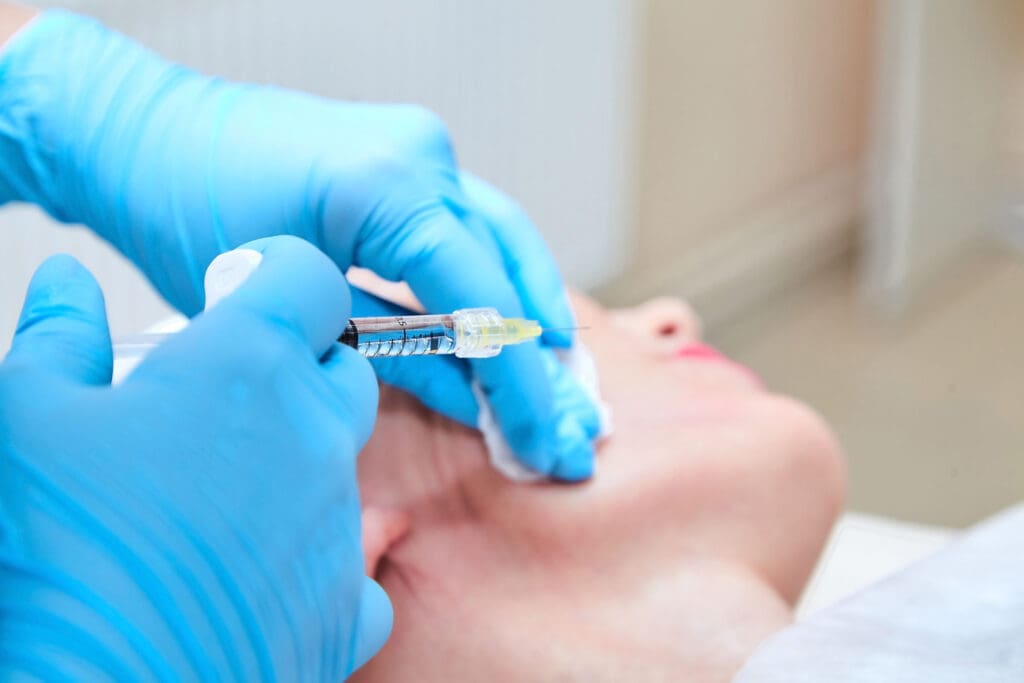
For optimal results, a course of three treatments, spaced 3 weeks apart, is recommended, followed by maintenance every 3-6 months. Although a single treatment can be beneficial, following the full schedule helps sustain fibroblast activity and maximise long-term improvements.
After treatment, you may experience mild redness, bruising, swelling, tenderness, or itching. Small bumps—similar to a nettle rash—may appear but usually resolve within a few days.
What outcome can I expect?
Unlike traditional aesthetic treatments that provide immediate results, PNs work by repairing and regenerating skin cells from within. Whilst you may notice subtle improvements within months, you will also be investing in the long-term health and resilience of your skin.
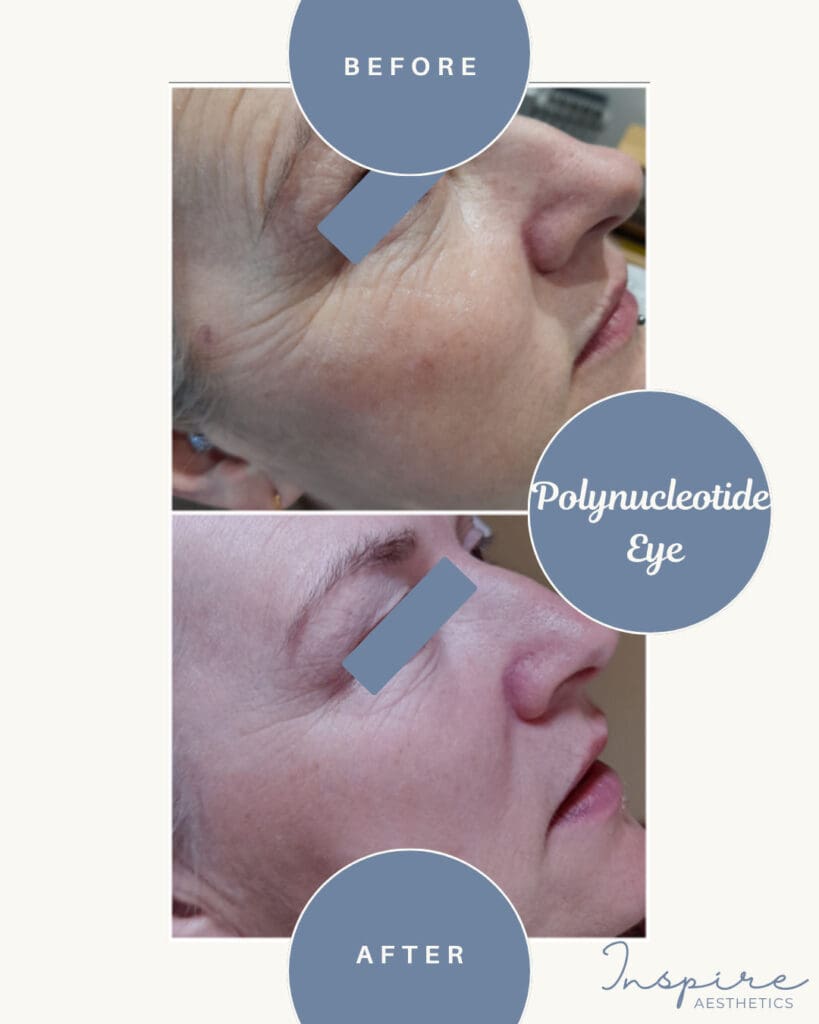
*Client has received an initial course of three treatments, and two 6-monthly maintenance treatments. “After” photos taken one month after 5th session.